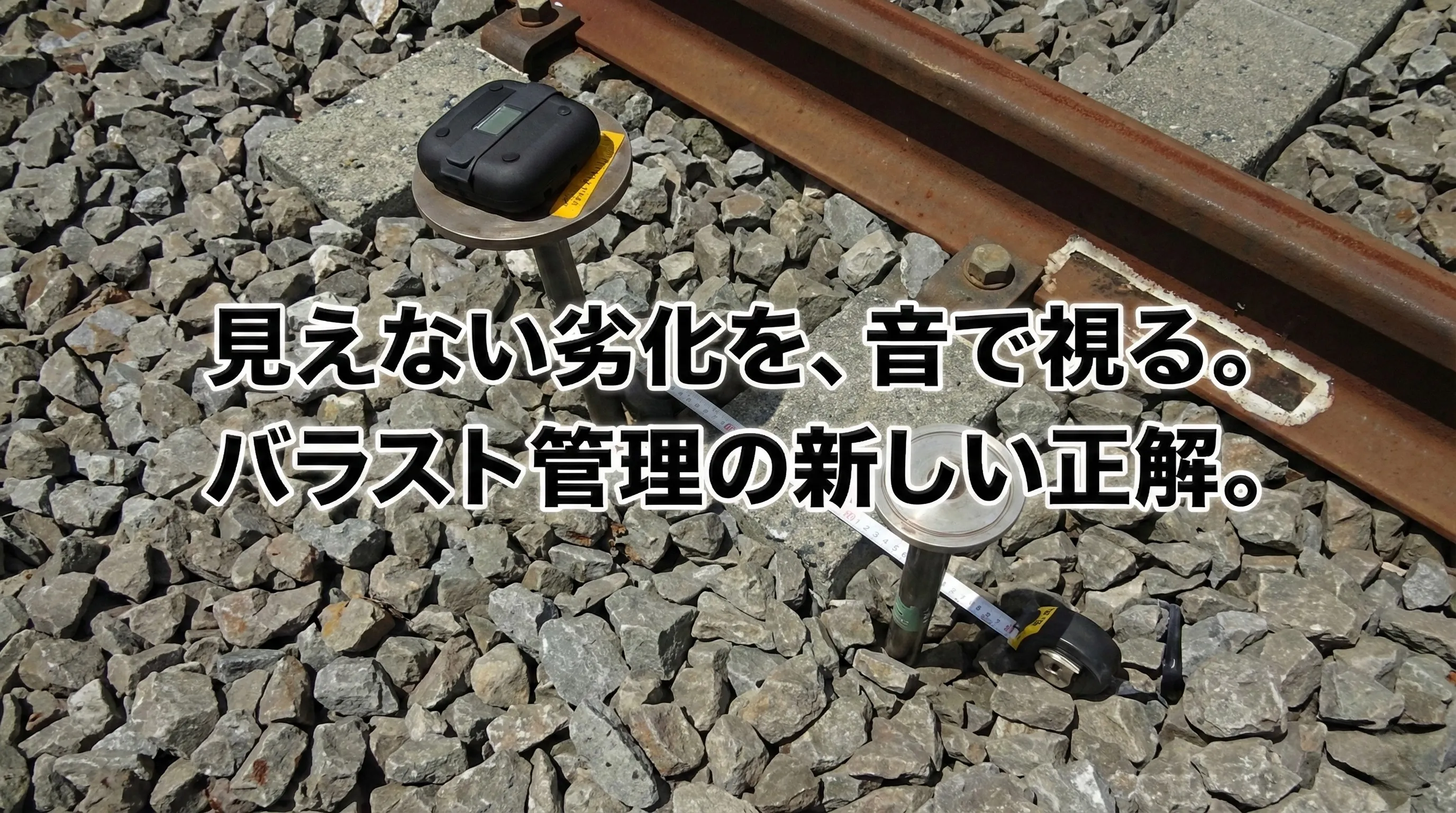
Establish Decision Criteria for Track Bed Replacement
with "Numerical Data and History" - Without Excavation
Ballast Checker

Instead of relying solely on "dig and check," quickly assess conditions on-site, maintain records, and connect to future maintenance planning.
Ballast Checker measures acoustic transmission levels through hollow driving probes inserted between sleepers, evaluating ballast soundness as FI value and A-C ranks.
- Measurement time: 30 seconds (excluding probe installation)
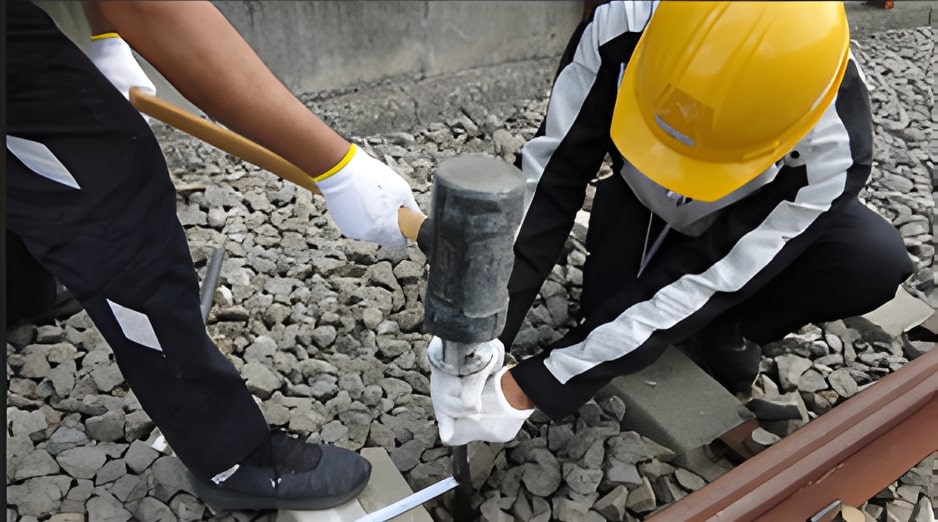
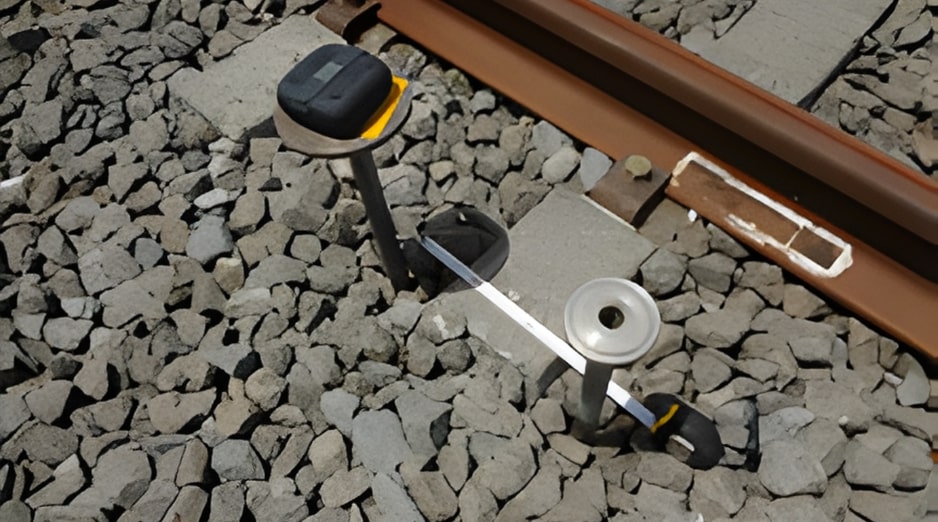
- Install two driving probes 330mm apart, centered on the sleeper
- Save measurement results with acoustic data and view history/deterioration prediction graphs
- Rank C (unsound) indicates track bed replacement is recommended
Document requests, on-site trial consultations, technical inquiries, cost/delivery estimates - all inquiries welcome.
*Pricing available upon request.
What You'll Learn on This Page
- Why track bed replacement decisions are difficult (common bottlenecks)
- The concept of "measuring conditions" without excavation
- What Ballast Checker can and cannot do (application conditions)
- How to use outputs (FI value, evaluation, history, deterioration prediction) for decision-making
- Implementation and field operation overview (procedures/data management)
Common Field Challenges
Regardless of role, the challenges faced in the field are remarkably similar.
- Weak justification for the decisions of track bed replacement: Difficulty exists in explaining necessity, prioritizing and gaining approval
- "Dig and check" involves significant time, safety, restoration and labor burdens: Night closure of train operation constraints severely limit inspection time
- Decisions become person-dependent, with results varying by operator (low reproducibility)
- Unable to predict deterioration progress, making it difficult to plan preventive maintenance
- Scattered records make historical comparisons and handovers difficult
Condition assessment that can be "reproduced on-site", "completed quickly", and "documented" is especially needed.
Proposal: The Option of "Measuring Conditions" Without Excavation
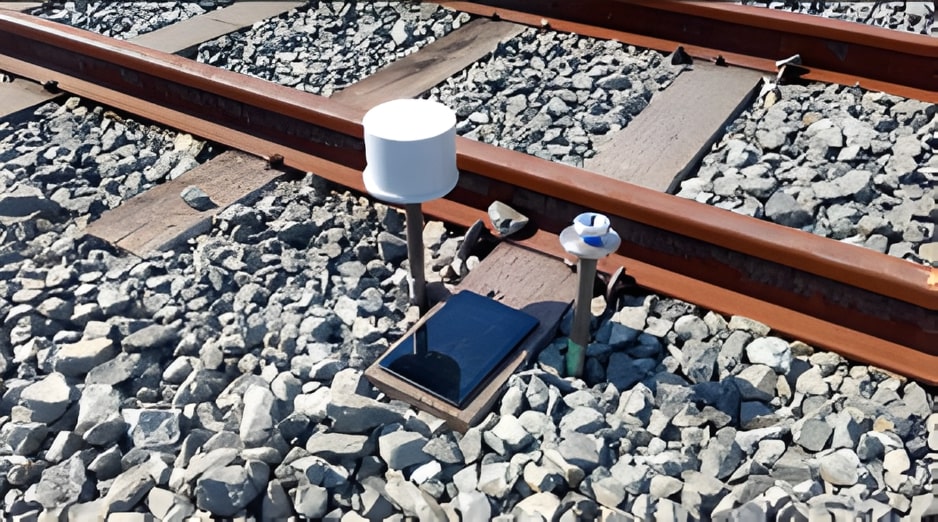
Ballast Checker evaluates ballast soundness based on the following principles.
- Install a speaker on one side of hollow driving probes inserted on both sides of a sleeper, outputting specialized acoustic signals
- Detect sound pressure of acoustic waves transmitted through the ballast at the top of the opposite probe
- Evaluate soundness from sound pressure level (transmission level)
The phenomenon of decreased acoustic transmission as deterioration progresses is utilized for condition assessment.
What Ballast Checker Offers (Three Key Values)
1) Quick On-Site Preliminary Assessment
The basic flow is simple.
- Install two driving probes 330mm apart, centered on the sleeper
- Operate measurement via the evaluation program on the measurement tablet
- Review results and save as needed
After starting measurement, evaluation sound is played and recorded for approximately 10 seconds, followed by analysis processing and the results are displayed.
Guideline: Measurement takes approximately 30 seconds (excluding probe installation).
2) Records Enable History and Prediction-Based Planning
- Measurement results are saved along with recorded acoustic data.
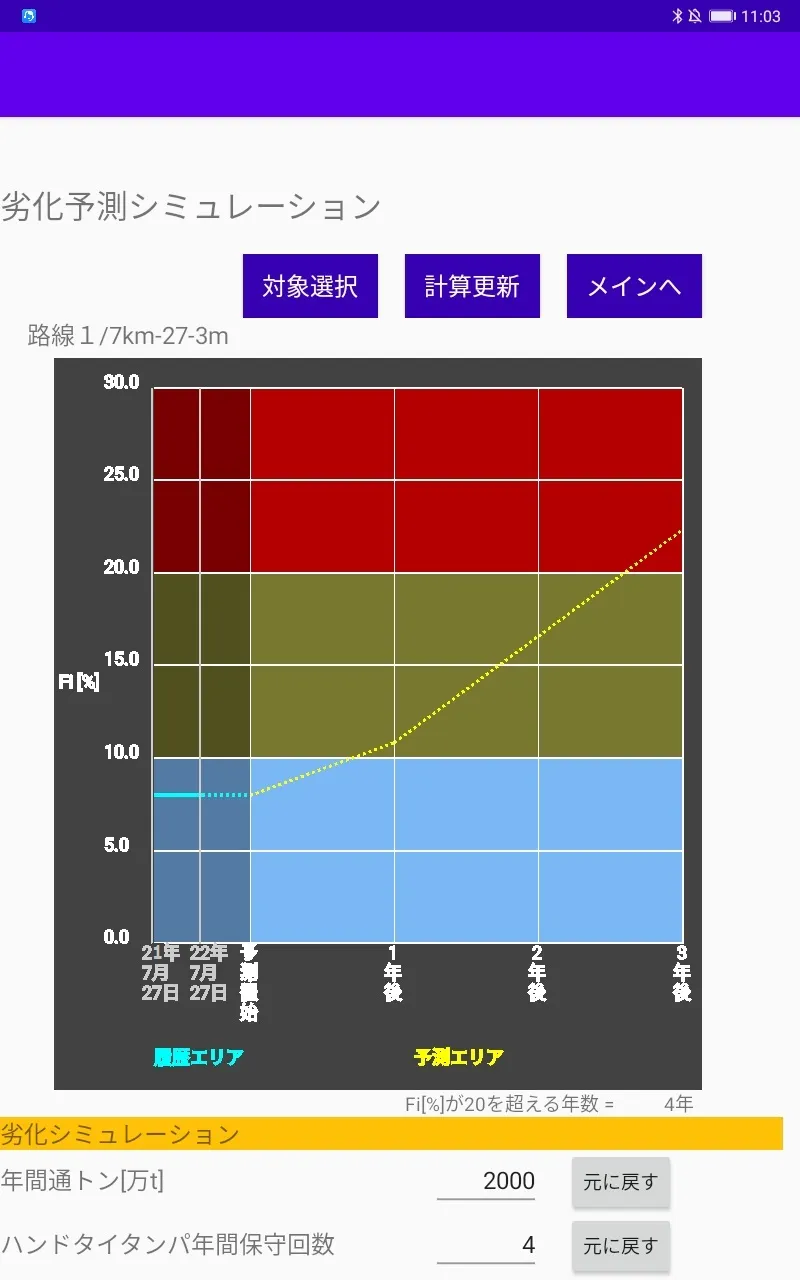
- View measurement history and future deterioration predictions in graphs.
- Deterioration prediction results, through maintenance information simulation, can serve as reference for future maintenance planning.
3) Outputs Support Accountability (Material for Approvals and Reports)
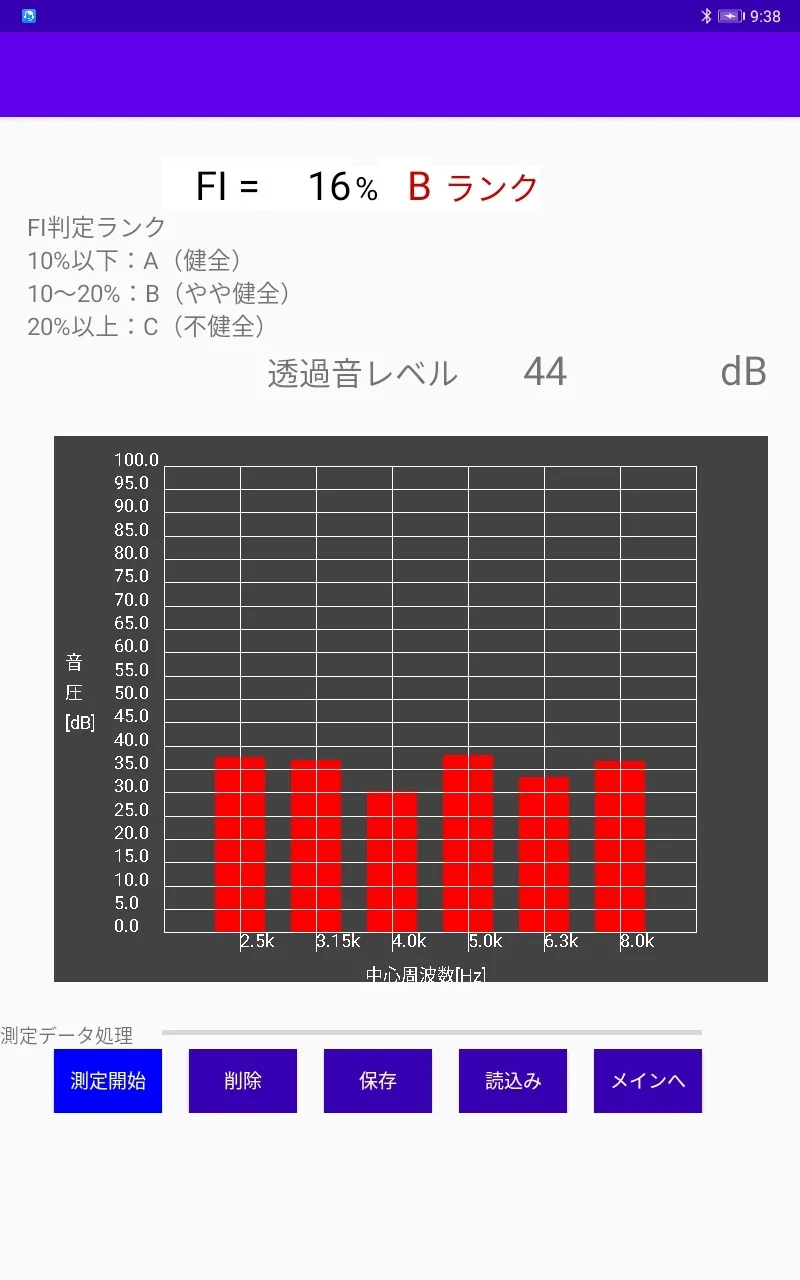
The measurement results screen displays:
- FI value as deterioration indicator
- Deterioration level shown as A-C ranks (FI evaluation rank)
- Overall transmission sound level (dB value)
- Sound pressure level graph by frequency band (analysis target frequency distribution)
Additionally, deterioration prediction displays projected years until FI[%] exceeds 20%.
If the results are evaluated as Rank C (unsound), the track bed replacement is recommended.
Important: Application Conditions and Constraints
Success of field implementation depends not only on understanding capabilities but also on properly sharing prerequisites.
Ambient Noise Effects
Depending on ambient noise conditions, accurate measurements or service life predictions may not be possible.
Measurements cannot be performed accurately if ambient noise (for example, motor sounds, metal striking sounds, etc.) is high, measurements should be conducted only in quiet conditions.
*This system has a function to remove interference mixed into recorded audio, but a message indicating removal failure may be displayed if the interference ratio is too high.
Speaker Volume (Maximum Volume) Required
This device is designed to analyze based on evaluation of the sound being outputted at maximum volume.
If measured without setting speaker volume to maximum, accurate evaluation cannot be performed.
Pre-charging is recommended to ensure sufficient power is available during measurement.
Measurement Process Overview (Field Workflow)
- Select sleeper and, if necessary, measure sleeper height to set probe depth marker
- Install probes at positions 165mm left and right of sleeper centerline (=330mm/2), setting probe distance to 330mm
- After installation, remove inner tube for leaving only outer tube, then install speaker stand, speaker and cover on one side
- Set up microphone on the other side and start measurement via tablet
- After reviewing results, enter line name, kilometer post and notes, then save the results (as necessary)
*Safety note: Probe installation work carries injury risk and requires caution.
Data Storage and Export
Measurement results can be saved, reloaded, and deleted.
Connect tablet via USB to access and export data from internal storage.
- Folders are created in internal storage [Result] folder: "Line Name" → "Kilometer Post"
- Files are saved with measurement date/time in filename
- Acoustic data: .wav, Measurement results: .csv
*Manual data manipulation may corrupt data structure; only copying is recommended.
Use Cases by Role
For Railway Operators (Track Maintenance/Facilities/Engineering)
- Use FI value, evaluation rank, history, and predictions for replacement/repair prioritization
- Present records and graphs as evidence for accountability (approvals/reports)
- Use deterioration prediction simulation as reference for maintenance indicator planning
For Construction Companies (Track/Civil Engineering)
- Facilitate survey-to-construction decision discussions using common indicators
- Easy to incorporate into limited-time inspection plans (30 sec measurement *excluding installation)
- Save measurement data to standardize report/explanation quality
For Consultants/Design Firms
- Use as preliminary assessment to identify target areas across wide regions
- csv/wav data export supports custom analysis and documentation
For Research/Testing Departments
- Review recorded data (audio playback/waveform verification)
- Reanalyze past data when parameters or formulas change
- Use deterioration prediction/simulation to verify impact of condition changes
Development and Intellectual Property Information
Research & Development: Railway Technical Research Institute (RTRI)
Patent: Japanese Patent Application Publication No. 2021-139725 "Track Bed Condition Evaluation Device and Track Bed Condition Evaluation Method"
Specifications (Summary)
*Detailed specifications, configuration and application conditions are available upon request.
- Evaluation acoustic sound pressure (speaker output): Approximately 100dB
- Measured sound pressure range (microphone recording): 20dB-70dB (values outside range are reference only)
- Analysis frequency range: 2.5kHz-8.0kHz (1/3 octave band)
- Driving probe dimensions (example):
- Outer tube: φ86mm, length 510mm, weight 1.1kg
- Inner tube: φ49mm, length 633mm, weight 2.1kg
- Stand: φ150mm, thickness 10mm, weight 1.1kg
- Cover: φ146mm, height 96mm, weight 2.0kg
Frequently Asked Questions (FAQ)
-
How is the price?
Pricing is available upon request. We will provide information based on your needs (document request, trial, technical consultation, cost/delivery estimates, etc.). -
How long does measurement take?
As a guideline, measurement takes approximately 30 seconds (excluding probe installation time). By starting measurement, results are displayed approximately 10 seconds later after evaluation sound playback, recording and analysis processing are executed. -
Can measurements be taken anywhere?
Depending on ambient noise conditions, accurate measurements or service life predictions may not be possible. Measurements should be conducted in an environment as quiet as possible. -
How can I interpret the evaluation results?
Measurement results display the FI value and A-C rank. If the results are evaluated as Rank C (unsound), the track bed replacement is recommended. -
Can data be exported?
Connect the tablet via USB to access internal storage and export results. Acoustic data is saved as .wav files, and measurement results are saved as .csv files.
"I want documents" "I want to try it" "I want to discuss applicability"
Please let us know your purpose first.
- Document Request
- On-site Trial (Demo) Consultation
- Technical Consultation (Application Conditions/Operation Methods)
- Cost/Delivery Estimation
- Joint Verification/Research Applications
*Anonymous case studies and reference introductions are available. Details will be provided individually.